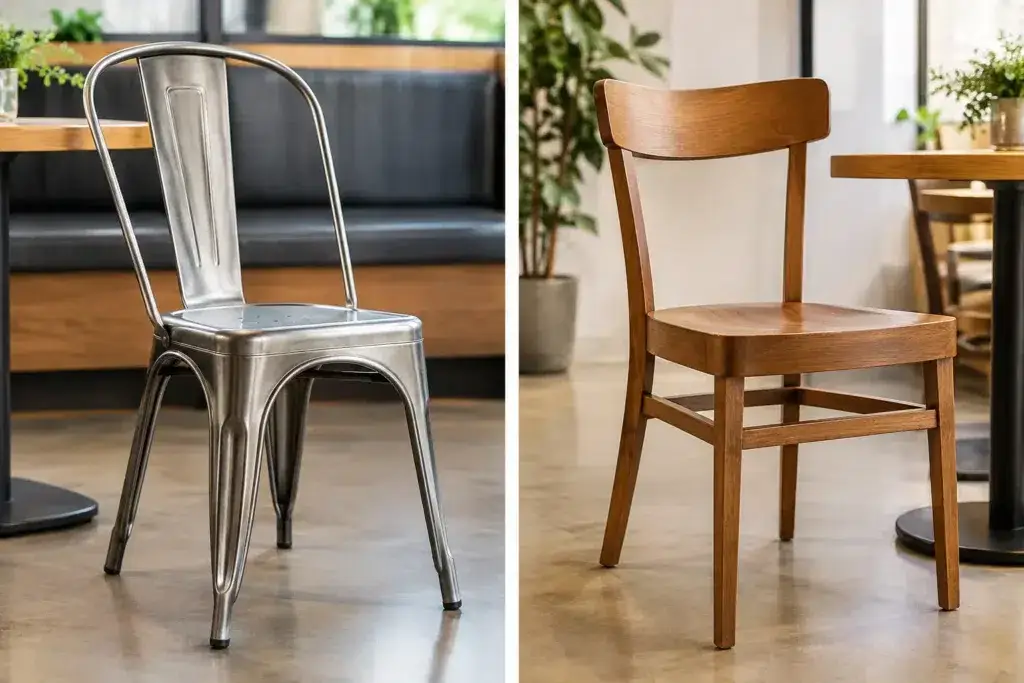
A chair decision can affect far more than a dining room’s appearance. It influences cleaning routines, floor noise, replacement planning, guest comfort, and how consistently a restaurant presents its brand over time. When comparing metal versus wood restaurant chairs, the better choice is rarely determined by looks alone. The right material depends on service volume, layout, concept, maintenance capacity, and the expected life of the furniture package.
For commercial projects, the most effective approach is to evaluate chairs as working assets. A seating selection should support the restaurant’s daily operations while reinforcing the intended guest experience – whether that means fast-turn casual dining, a polished steakhouse, an outdoor patio, or a hospitality-driven private dining space.
Metal Versus Wood Restaurant Chairs: Start With Operations
Metal and wood chairs can both perform well in commercial environments, but they respond differently to wear, movement, moisture, and repeat cleaning. A chair that looks appropriate on a finish board may be less suitable once it is moved hundreds of times each day, stacked after closing, or exposed to frequent spills.
Start with a clear picture of the dining room’s demands. High-turnover restaurants, campus dining facilities, breweries, and quick-service concepts often need seating that is easy to move, easy to clean, and resilient under constant use. Full-service restaurants may place more value on warmth, acoustic comfort, and a refined visual presence. The expected customer, staff workflow, and service style should guide the material decision before color or silhouette is finalized.
It is also useful to consider where the chairs will be used. Main dining rooms, bar areas, private event spaces, covered patios, and waiting areas may each require different performance characteristics. A coordinated project does not require every chair to be identical. It requires every selection to serve a defined purpose while maintaining a consistent design language.
When Metal Restaurant Chairs Make Sense
Metal chairs are often selected for their strength, clean profiles, and practical maintenance. They can suit industrial, modern, contemporary, urban, and fast-casual interiors, but the category extends well beyond a raw warehouse aesthetic. Powder-coated frames, upholstered seats, wood accents, and tailored silhouettes allow metal seating to work in more elevated dining settings as well.
Strength for high-use environments
A properly engineered metal frame can perform exceptionally well where chairs are moved frequently or subjected to heavy daily traffic. This makes metal a practical choice for busy dining rooms, banquet areas, employee cafeterias, and flexible event spaces. Many metal chair designs also offer stackable options, which can improve storage efficiency and simplify room resets.
Frame construction matters. Commercial buyers should review weld quality, tubing gauge, joint design, weight capacity, and the way the seat and back are attached to the frame. A lower-priced metal chair may appear similar to a commercial-grade alternative but use lighter materials or weaker connection points that loosen under repeated use.
Easier cleaning and finish control
Metal frames are generally straightforward to wipe down, especially when finished with a quality powder coat. This can be valuable in concepts with frequent turnover, children’s seating, bar service, or higher spill risk. Dark finishes may conceal everyday scuffs more effectively, while lighter colors can create a clean, branded appearance but may demand more attentive touch-up practices.
Metal is not maintenance-free. Chips in the finish can expose the substrate and lead to corrosion, particularly in humid, coastal, or outdoor-adjacent settings. Protective glides should be inspected and replaced as needed. Dragging metal chairs across hard flooring also creates noise and can damage both flooring and chair feet if glides are neglected.
Design considerations
Metal chairs can look visually lighter than substantial wood seating, which helps preserve sightlines in compact dining rooms. They are especially useful where a restaurant wants a crisp, efficient layout without making the room feel crowded. However, an all-metal chair can feel cooler or more utilitarian if the seat shape, upholstery, or surrounding materials do not add warmth.
For restaurants where guests stay longer, consider metal frames with upholstered seats, contoured plywood shells, or wood seat inserts. These combinations can retain the durability and cleanability of metal while improving perceived comfort.
When Wood Restaurant Chairs Are the Better Fit
Wood chairs remain a strong choice for restaurants that want warmth, craftsmanship, and a more established hospitality feel. They work naturally in traditional, upscale casual, coastal, farmhouse, bistro, and chef-driven concepts. With the right profile and finish, wood can also feel distinctly modern.
A warmer guest experience
Wood has visual depth that metal cannot fully replicate. Grain variation, stain color, and joinery can add character to a space and help a dining room feel less institutional. For concepts built around comfort, local identity, natural materials, or extended table time, wood chairs can support a more inviting atmosphere.
The material also tends to soften a room acoustically and visually. In restaurants with hard surfaces such as concrete, tile, exposed ceilings, and glass, wood seating can reduce the sense of coldness that often develops when every major element is rigid or reflective.
Repairability and long-term appearance
One advantage of quality wood seating is that minor wear can sometimes be repaired or refinished rather than requiring complete replacement. Surface scratches, worn finish areas, and loose joints may be addressed by a qualified furniture professional, depending on the chair’s construction and finish.
That said, not all wood chairs are equally serviceable. Solid hardwood construction, strong joinery, and commercial-grade finishes are critical. Chairs made with weak joints, thin veneers, or consumer-grade coatings may loosen, split, or show water damage prematurely. Restaurant staff should avoid using chairs as step stools or moving them by the back alone, since these practices place stress on joints over time.
Maintenance trade-offs
Wood requires thoughtful finish selection. Dark stains can disguise some marks but may reveal dust or scratches, while natural finishes can show spills and oils more readily. In high-volume settings, a durable protective coating is essential for resisting moisture, cleaning chemicals, and routine abrasion.
Wood is also more sensitive to environmental changes than metal. Excessive humidity, direct sunlight, and repeated wet cleaning can affect appearance and stability. This does not make wood unsuitable for demanding restaurants. It means the product must be specified for the environment and supported by a realistic maintenance plan.
Consider Comfort, Noise, and Floor Protection
The material alone does not determine whether a chair is comfortable. Seat height, depth, back angle, arm placement, and upholstery have greater influence on the guest experience. Still, wood chairs often deliver a more naturally substantial feel, while metal chairs can be designed to feel lighter and easier for guests and staff to reposition.
Noise deserves attention during planning. Metal chairs without quality glides can create disruptive scraping sounds across concrete, wood, or tile. Wood chairs can also cause floor wear, particularly when chair feet are unprotected. Specify appropriate glides for the flooring material, and make glide replacement part of regular facility maintenance.
For dining rooms with hard flooring and close table spacing, acoustics may influence the final choice as much as aesthetics. Upholstered seats, felt-backed glides, and a mix of chair materials can help control sound without changing the overall design direction.
Specify for the Whole Furniture Package
A chair should not be selected in isolation from tables, booths, bar stools, lighting, flooring, and circulation paths. Metal seating may complement steel table bases, concrete floors, and exposed architectural elements. Wood seating may coordinate better with wood tabletops, upholstered banquettes, and warmer wall finishes. In many restaurant projects, the strongest result comes from combining both materials strategically.
For example, a restaurant may use wood chairs in the main dining room to establish warmth, metal bar stools for durability at high-traffic counters, and metal-framed outdoor seating where weather resistance is a priority. This approach provides material variety without sacrificing consistency, particularly when finishes and upholstery are coordinated across the project.
Before issuing a purchase order, confirm the chair’s overall dimensions, seat height, arm clearance, weight, floor glide type, finish, stacking capability, and intended indoor or outdoor use. A sample review is especially valuable when matching stain colors, testing upholstery, or verifying how a chair performs with the selected table height.
Make the Choice Based on Use, Not Assumptions
Metal is often the practical answer for high-use, flexible, and easy-to-clean applications. Wood is often the stronger choice where warmth, visual character, and a more residential hospitality feel are central to the concept. Neither material is automatically superior. The best specification accounts for traffic, maintenance, guest dwell time, environmental exposure, and the visual standard the operation needs to maintain.
A coordinated furniture partner can help translate those requirements into a workable seating package, including custom finishes, matching tables, booth integration, and delivery planning. FOH Furniture supports commercial teams that need those decisions aligned before furniture arrives on site.
The most useful next step is simple: test the proposed chairs in the context of the actual project. Sit in them, move them across the intended floor, place them under the selected tables, and review the finish under the restaurant’s lighting. That short evaluation can prevent a material choice that looks right in a showroom but works poorly during service.