
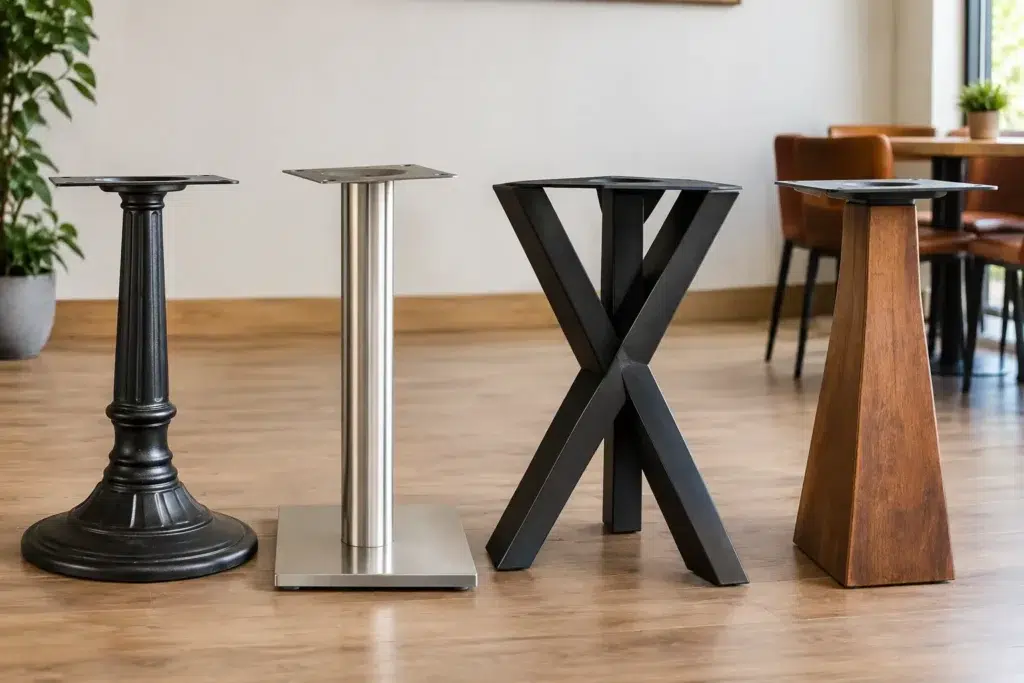
Best Restaurant Table Base Materials for Commercial Use
A restaurant table can look perfectly specified on a floor plan and still become an operational problem once service begins. A base that rocks on uneven flooring, corrodes near an entry, or cannot support a larger top affects guest comfort, staff workflow, and replacement costs. Selecting the best restaurant table base materials means evaluating the entire application: traffic level, tabletop size and weight, cleaning routine, indoor or outdoor exposure, and the visual standards of the brand.
For commercial projects, the right answer is rarely one material used everywhere. Cast iron, steel, stainless steel, aluminum, and wood each serve a different purpose. The strongest specification is the one that balances stability, maintenance, finish requirements, and lifecycle value for each zone of the dining environment.
What Determines the Best Restaurant Table Base Materials?
Material matters, but base performance also depends on geometry, weight distribution, column diameter, mounting plates, leveling glides, and the relationship between the base footprint and tabletop. A premium material cannot compensate for an undersized base or a top that extends too far beyond its support.
Before selecting a base material, confirm the table’s intended top dimensions and weight. Solid wood, stone, thick quartz, and certain compact laminate tops can be substantially heavier than standard laminate or veneer. Communal tables and larger rectangular tops may require multiple bases, trestle construction, or a custom support system rather than a single pedestal.
The operating environment is equally significant. A quick-service location with frequent wipe-downs has different needs than an upscale dining room, a covered patio, or a coastal hospitality property. When furniture is planned around actual use conditions instead of appearance alone, operators avoid premature finish failure and recurring stability complaints.
Cast Iron: The Standard for Stable Indoor Tables
Cast iron remains one of the most dependable choices for indoor restaurant table bases. Its weight provides a low center of gravity, helping tables remain stable under everyday guest use. It is particularly well suited to two-top and four-top pedestal tables, where a compact footprint and reliable support are priorities.
Commercial cast iron bases are often finished with powder coating, commonly in black, bronze, or custom colors. The finish gives designers flexibility while helping protect the metal in dry interior settings. Cast iron also works with a broad range of tabletop materials, including laminate, solid wood, veneer, and many stone-look surfaces, provided the base is correctly sized for the top.
Its trade-off is exposure to moisture. If the coating is chipped or worn, cast iron can rust, especially around floor-level edges and outdoor applications. It is also heavy, which is an advantage for stability but a consideration during delivery, installation, and frequent floor-plan changes. For fixed or semi-fixed indoor layouts, those trade-offs are usually manageable and often worthwhile.
Best uses for cast iron
Cast iron is a practical fit for dining rooms, cafés, bars, and booth-adjacent tables where operators want a classic commercial look and minimal table movement. It is less appropriate for open patios, poolside areas, or locations that regularly hose down floors.
Steel: Flexible, Strong, and Easy to Customize
Steel is among the most versatile restaurant table base materials because it can be formed into a wide range of shapes. Square columns, sled bases, X-bases, trestles, and custom welded frames are all feasible with steel. That flexibility makes it valuable for concepts that need a distinctive design language or tables built around unusual top sizes.
A properly fabricated steel base offers excellent structural strength and can support larger or heavier tabletops than many standard pedestal options. It is a strong candidate for communal dining tables, banquettes with integrated tables, high-tops, and custom restaurant furniture packages where dimensions must align with a specific floor plan.
Steel needs a protective finish. Powder coating is a common commercial solution because it offers consistent color and good wear resistance. For interior restaurant use, powder-coated steel generally performs well with routine cleaning and periodic inspection. In exposed outdoor settings, however, standard coated steel requires more caution. Scratches, weld points, and standing water can create corrosion risks over time.
For projects requiring custom dimensions or coordinated bases across dining, bar, and hospitality spaces, steel offers a practical path to design consistency. FOH Furniture can help align base construction, tabletop specifications, finishes, and layout needs as part of a coordinated commercial furnishing scope.
Stainless Steel: A Smart Choice for Wet or Demanding Areas
Stainless steel is selected when corrosion resistance and sanitation are central to the application. It is commonly used in foodservice support areas, covered outdoor dining, coastal properties, and restaurant environments where humidity, spills, or frequent cleaning create demanding conditions.
The material’s clean, contemporary appearance also suits modern hospitality interiors. Brushed stainless finishes can complement polished concrete, stone, glass, and metal accents without looking overly industrial. Because the finish is integral to the material rather than simply a coating over carbon steel, minor surface scratches are generally less visually disruptive than chips in painted metal.
Not all stainless steel performs the same way outdoors. Grade, finish, exposure to chlorides, and maintenance practices affect results. Coastal projects, for example, may need a higher corrosion-resistant specification and regular cleaning to remove salt deposits. Stainless steel is also more expensive than painted steel or cast iron, so it is best used where its performance benefits justify the added investment.
Aluminum: Practical for Outdoor Restaurant Dining
Aluminum is a leading option for outdoor restaurant table bases because it is naturally corrosion resistant, lightweight, and easy for staff to move during cleaning or reconfiguration. It is especially useful for patios, rooftops, sidewalk dining, pool areas, and seasonal hospitality spaces.
Compared with cast iron, aluminum is easier to transport and reposition, but it does not provide the same inherent weight. In windy locations or busy outdoor environments, a lightweight aluminum base may need a wider footprint, a heavier tabletop, or added ballast to maintain stability. The base should always be reviewed with the specific top and site conditions in mind.
Powder-coated aluminum expands the available color range and can support a more tailored brand presentation. Bare or brushed aluminum may be appropriate for casual, contemporary, or resort-oriented settings. Although aluminum does not rust like ferrous metals, it still benefits from routine care. Harsh cleaners, salt exposure, and standing water can affect the appearance of finishes over time.
When aluminum is the better operational choice
Choose aluminum when staff mobility, weather exposure, and corrosion resistance outweigh the need for maximum base weight. It is often the most efficient material for dining programs that shift between daily service, private events, and seasonal layouts.
Wood: Warmth and Custom Design, With More Care Required
Wood table bases bring warmth that metal cannot always replicate. They are effective in chef-driven restaurants, boutique hotels, wine bars, and hospitality concepts where the furniture is expected to feel residential, crafted, or distinctly local. A wood base can also be built to coordinate with millwork, chairs, bar fronts, and other interior finishes.
For commercial use, species selection, joinery, sealing, and construction quality matter. Solid hardwood or engineered wood construction designed for contract settings is more suitable than lightly built residential furniture. The base must also be engineered for the tabletop load and the lateral movement created when guests pull tables across flooring.
Wood is more sensitive to moisture, impacts, and finish wear than most metal options. It performs best in controlled indoor environments where maintenance teams can quickly address spills and avoid abrasive chemicals. It is generally not the first choice for uncovered outdoor dining, wet locations, or high-turnover spaces with aggressive cleaning routines.
Match the Base Material to the Tabletop and Layout
A table base should never be specified separately from its top. A thin laminate top may work well on a standard pedestal, while a thick butcher-block or stone top may require a larger base plate, wider footprint, or multiple supports. As a general planning rule, the base should provide enough coverage to resist tipping without interfering with seated guests’ legroom.
Pedestal bases are efficient for individual dining tables because they eliminate corner legs and simplify chair placement. Four-leg and trestle-style bases can offer stronger support for larger rectangles and communal tables. In tight dining rooms, the difference affects more than appearance: it influences aisle clearance, accessibility, cleaning access, and how easily servers move through the room.
Leveling glides deserve attention as well. Even a well-built base can wobble on uneven flooring if it lacks durable, adjustable glides. For tile, concrete, and other hard surfaces, quality glides protect both the floor and the table base while helping maintain a stable guest experience.
Specify for Lifecycle Cost, Not Just Purchase Price
The lowest initial price does not always produce the lowest operating cost. A base that needs frequent touch-up, fails prematurely outdoors, or cannot be paired with future replacement tops can create avoidable expense and disruption. Commercial buyers should consider expected service life, cleaning requirements, available replacement components, and the likelihood of layout changes.
For many indoor restaurant projects, powder-coated cast iron or steel delivers the best balance of stability, cost control, and design flexibility. Aluminum often leads for exposed outdoor spaces, while stainless steel earns its premium in wet, coastal, or sanitation-focused applications. Wood serves a more design-specific role in protected interiors where warmth and custom character are central to the concept.
The best specification gives guests a table that feels solid, gives staff furniture that works with service, and gives the project team a material strategy that will still make sense after years of use.

Furnishing a Commercial Space?
Let’s bring your vision to life with furniture that is durable, compliant, and built for real-world performance.
Planning a Commercial Furniture Project?
- Expert Project Guidance
- Competitive Pricing
- Quality You Can Trust


