
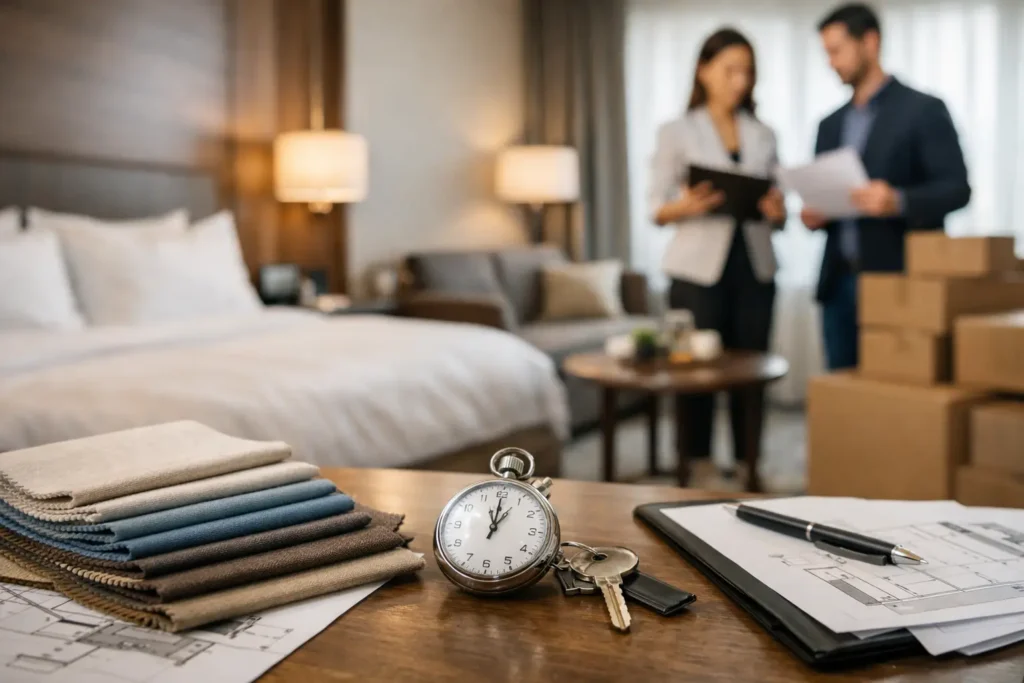
How Hospitality Furniture Packages Save Time
A hotel renovation rarely slows down for furniture procurement. While operators are balancing opening dates, brand standards, guest expectations, and construction coordination, the furnishing scope still has to land on time and perform for years. That is why hospitality furniture packages are often the smarter commercial approach – not because they are simpler, but because they reduce fragmentation across design, sourcing, customization, and installation.
For hotels, resorts, extended-stay properties, boutique lodging, and mixed-use hospitality projects, furniture is not a line item you can treat in isolation. Guest rooms, lobbies, lounges, dining areas, outdoor spaces, and back-of-house zones all affect the guest experience and the daily workload of staff. A package-based approach helps teams make decisions in context, rather than piecing together products from multiple vendors and hoping everything aligns at the end.
What hospitality furniture packages actually include
The term can mean different things depending on the property type and project scope. In a commercial setting, hospitality furniture packages typically refer to coordinated furnishing solutions built around a complete area, multiple areas, or an entire property. That can include guest room casegoods, beds, seating, lounge furniture, tables, restaurant seating, outdoor furniture, and custom pieces developed to fit a brand or floor plan.
The key distinction is coordination. A package is not just a bulk order. It is a planned furniture solution with selections that work together visually, functionally, and logistically. That matters when a project team needs furniture that meets design intent, use requirements, installation sequencing, and budget targets at the same time.
In many cases, the strongest package solutions also include planning support, finish coordination, specification review, manufacturing oversight, delivery scheduling, and project communication. For owners and trade professionals, that support can be as valuable as the furniture itself.
Why package-based sourcing works better for hospitality projects
Hospitality environments put unusual pressure on furniture. Pieces need to look right on opening day, but they also need to hold up under high traffic, frequent cleaning, luggage impact, food and beverage use, and ongoing turnover. When items are sourced one by one from unrelated suppliers, the risk is not just style inconsistency. It is mismatched lead times, uneven quality, finish variation, warranty confusion, and installation delays.
Hospitality furniture packages reduce those risks by bringing the furnishing scope under a more controlled process. Designers can develop a more cohesive visual language across spaces. Operators can compare budgets against a coordinated plan instead of a scattered product mix. Project managers get fewer moving parts to track. Contractors have clearer scheduling windows. Procurement teams spend less time chasing approvals and substitutions across multiple channels.
That does not mean every package is identical or rigid. Good package planning leaves room for custom requirements, alternate finish options, and area-specific priorities. A boutique hotel may want more unique public-space pieces and fewer standard room components. A select-service property may prioritize repeatable room sets, durable finishes, and faster rollout. The value comes from integration, not one-size-fits-all selection.
Where hospitality furniture packages create the most value
Guest rooms are usually the most obvious starting point because repetition creates efficiency. When bed frames, nightstands, desks, seating, and storage pieces are designed as a coordinated set, the property gets consistency across rooms and cleaner procurement for larger counts. It also makes future replenishment more manageable, especially if the project includes standardized dimensions and finish specifications.
Public spaces are where packages often become more strategic. Lobby seating, communal tables, bar stools, dining chairs, and accent pieces have to support circulation, branding, and varied guest behavior throughout the day. These spaces need flexibility, but they also need discipline. A package helps balance statement pieces with practical commercial-grade seating, table surfaces, and layout requirements.
Outdoor hospitality areas deserve the same level of planning. Poolside seating, patio dining, rooftop lounge furniture, and weather-exposed accent tables require a different material conversation than indoor spaces. If outdoor selections are handled separately and late in the project, they often introduce delays or quality compromises. Including them in the overall package keeps materials, lead times, and visual continuity under better control.
What to look for in hospitality furniture packages
The first question is not price. It is scope clarity. A useful package should define what spaces are covered, what products are included, what can be customized, and what assumptions are built into the quote. If those details are vague, buyers usually end up with scope gaps that surface later during installation.
The second priority is commercial suitability. Hospitality furniture should be specified for actual use conditions, not just appearance. That includes construction quality, material durability, cleanability, finish performance, and replacement planning. A chair that looks right in a rendering but fails under daily restaurant service is not a value purchase.
Customization is another factor, but it should be approached carefully. Custom capabilities are valuable when they solve a real project need, such as fitting a room layout, supporting a branded design language, or meeting a specific operational requirement. Not every item needs to be custom. In many projects, the best package combines standard components with selective customization in high-impact areas.
Buyers should also evaluate process support. The more complex the hospitality project, the more important it is to work with a furnishing partner that can handle planning, coordination, and production visibility. A supplier that only ships products may be enough for a small refresh. For larger projects, teams usually need more than that.
The trade-offs buyers should understand
Hospitality furniture packages are efficient, but they are not automatically the cheapest option on paper. A piecemeal approach can sometimes produce lower upfront numbers if teams compare isolated products without accounting for coordination costs, freight complexity, delays, or replacements. The real question is total project value, not line-by-line sticker price.
There is also a balance between speed and originality. Some package solutions are built for fast deployment and repeatable outcomes, which can be ideal for multi-property groups or prototype-driven brands. Others are more design-intensive and allow deeper customization, but that usually affects timeline, approvals, and budget. Neither approach is inherently better. It depends on whether the project is driven more by speed, brand distinction, operational durability, or a mix of all three.
Another common issue is overstandardization. Consistency is useful, but hospitality projects still need to respond to architecture, guest profile, and local market positioning. The best packages create cohesion without flattening the identity of the space.
How a full-service partner changes the outcome
The difference between a package and a workable package often comes down to execution. Commercial buyers do not just need furniture selections. They need a furnishing process that supports planning, approvals, production, delivery, and installation sequencing.
A full-service partner can help shape the package around actual project conditions. That may include reviewing plans, aligning products with design intent, adjusting dimensions, coordinating finishes, consolidating categories, and anticipating issues before they hit the field. For design firms and architects, that support helps protect specification quality. For owners and operators, it reduces avoidable friction.
This is especially relevant when projects involve multiple spaces with different performance needs. A lobby lounge, guest room, breakfast area, and outdoor terrace should not be treated as unrelated purchasing tasks. They should be part of a coordinated furnishing plan with shared oversight and realistic implementation. That is where companies such as FOH Furniture bring value – not just by supplying products, but by supporting the project from specification through execution.
When hospitality furniture packages make the most sense
They are especially effective for new developments, brand conversions, renovations with tight schedules, and multi-area refreshes where consistency matters. They also make sense for operators who want to avoid managing separate vendors for casegoods, seating, tables, and custom pieces.
For smaller projects, the decision depends on complexity. A limited guest room update may not require a full-property package, but even then, bundling key categories can improve control and reduce sourcing time. Once a project includes several zones, custom requirements, or phased delivery, package-based planning becomes much harder to ignore.
The best hospitality environments feel intentional to the guest and manageable to the team running them. That usually does not happen by buying furniture in fragments. It happens when the furnishing strategy is built to support design, operations, and delivery at the same time. If your project needs consistency without sacrificing flexibility, hospitality furniture packages are not just a procurement option – they are a better way to keep the entire project moving in the right direction.
The right package should make your next decision easier, not lock you into the wrong one.

Furnishing a Commercial Space?
Let’s bring your vision to life with furniture that is durable, compliant, and built for real-world performance.
Planning a Commercial Furniture Project?
- Expert Project Guidance
- Competitive Pricing
- Quality You Can Trust


