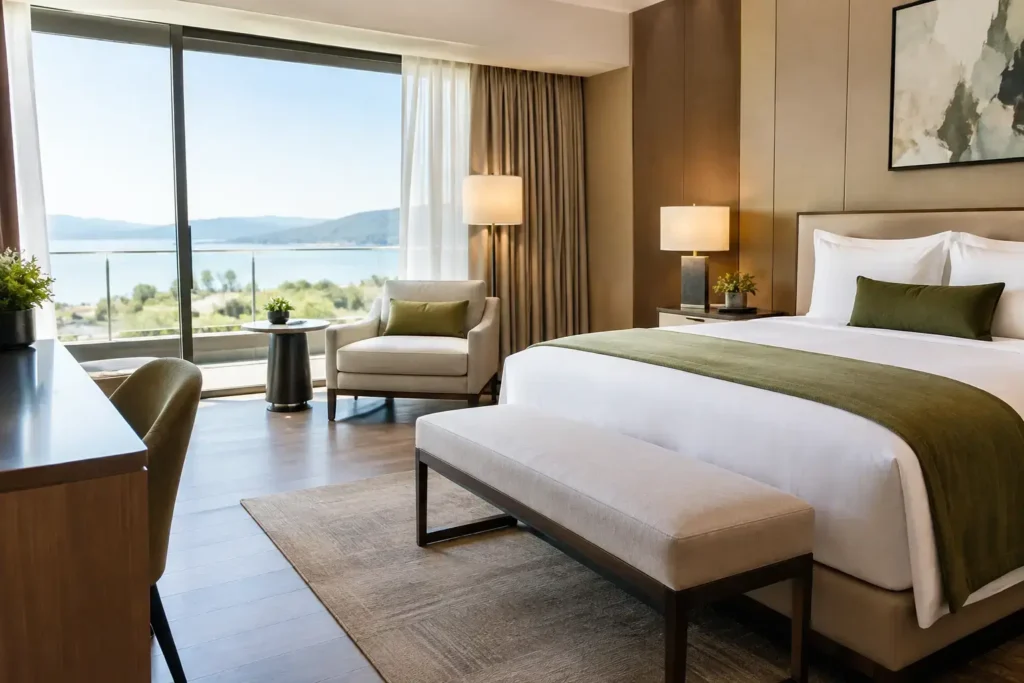
A lobby chair is no longer just a place to wait for a room key. It may serve a guest checking email, a family regrouping after travel, or a remote worker staying through the afternoon. That shift is defining hospitality furniture design trends: commercial spaces must feel distinctive and comfortable while performing reliably through constant use, cleaning, reconfiguration, and high guest expectations.
For hotel owners, operators, architects, and designers, the question is not whether a space should follow a trend. It is whether the trend supports the property’s operating model, brand position, maintenance capacity, and renovation cycle. The strongest furniture programs translate current design direction into pieces that can be specified, sourced, installed, and maintained with confidence.
Hospitality Furniture Design Trends Shaping Commercial Projects
Residential comfort with commercial performance
Hospitality interiors continue to move away from overly formal, uniform furnishing schemes. Lounge seating is deeper, softer, and more layered. Guestroom chairs resemble residential accent pieces, while public-space tables and banquettes create a sense of familiarity rather than a corporate waiting-room feel.
The operational requirement remains different from residential design. A hotel lounge chair needs a commercial-grade frame, contract-appropriate upholstery, cleanable surfaces, and replacement options that support the life of the property. The design goal is relaxed comfort, but the specification must account for traffic, luggage impact, beverage spills, housekeeping procedures, and the ability to order matching units later.
This is where custom manufacturing adds value. Designers can preserve the intended silhouette while adjusting seat height, foam density, fabric selection, base material, or dimensions for the project. A visually soft chair can still be engineered for demanding daily use.
Flexible public spaces that earn their footprint
Hotel lobbies, breakfast areas, rooftop venues, and meeting pre-functions are being asked to do more than one job. A lobby may operate as a social setting in the evening, a work zone in the morning, and an event reception area during peak periods. Fixed furniture still has a role, particularly where it defines circulation or anchors a dining concept, but movable pieces provide important operational range.
Modular lounge seating, nesting tables, lightweight occasional chairs, and mobile communal tables help teams reset spaces without a full renovation. The best approach depends on the property. A boutique hotel with a highly curated lobby may prioritize built-in banquettes and statement pieces. A convention hotel may need furniture that can be regrouped quickly for guest volume and events.
Flexibility should not become an excuse for undersized or unstable furniture. Pieces need the right weight, glides, joinery, and durability for frequent movement. Planning clear storage and reset procedures is just as important as selecting the furniture itself.
Material contrast and tactile durability
Current hospitality palettes favor material depth over one-note finishes. Wood grain, textured fabrics, stone-look tops, woven details, metal accents, and performance vinyl can coexist in a coordinated package. The result is a more layered environment that photographs well and feels intentional in person.
For commercial projects, material contrast must be managed carefully. A natural wood finish can bring warmth to a lobby, but the selected finish should tolerate cleaning products and surface contact. Textured upholstery adds visual interest, yet overly open weaves can retain debris and complicate maintenance. Light fabrics can support an elevated look, but only when the cleaning protocol, soil resistance, and replacement strategy are realistic.
Performance does not require a sterile appearance. Commercial-grade textiles now offer richer color, softer hand feel, and more convincing textures than many hospitality teams expect. The key is reviewing samples under the project’s actual lighting and pairing aesthetic selection with documented performance requirements.
Local character without themed interiors
Guests increasingly expect a property to feel connected to its location. Furniture supports that goal through regional color references, locally influenced forms, and materials that reflect the setting. A coastal destination may incorporate pale woods, woven textures, and relaxed lounge profiles. An urban hotel may use tailored upholstery, darker metal details, and compact seating arrangements that reflect the energy of the neighborhood.
The trade-off is longevity. A literal theme can age quickly and limit future repositioning. Rather than specifying furniture that imitates a destination, project teams can use proportion, finish, texture, and color to create a sense of place. This produces a more durable brand expression and makes phased replacements easier to manage.
Technology-ready furniture without visible clutter
Power access is now a basic guest expectation in many public areas. Side tables, communal worktables, lounge seating, and guestroom desks need to support devices without turning the room into a field of exposed cords and adapters. Furniture planning should consider outlet placement, charging access, cable routing, and maintenance access early in the design process.
Integrated power is useful, but it is not automatically the right answer for every piece. In a high-turnover restaurant or poolside area, removable or serviceable power components may be more practical than fully integrated units. In a lobby designed for extended stays, built-in charging can materially improve the guest experience. The right solution depends on how guests use the space and how easily the operations team can service it.
Where Hospitality Design Meets Procurement Reality
A compelling concept can lose momentum when furniture is selected one item at a time from disconnected sources. Mismatched lead times, inconsistent finishes, unclear freight responsibilities, and limited accountability can put pressure on the construction schedule and the opening date.
A coordinated furniture package helps project teams evaluate the full environment rather than isolated products. It allows seating, tables, casegoods, booths, and outdoor pieces to be reviewed for visual consistency, dimensions, finish compatibility, and installation sequencing. It also creates a clearer path for budget decisions. Teams can identify where a custom feature supports the brand and where a standard commercial component is the more efficient choice.
Lead time should be addressed before design development is complete. Custom furniture offers meaningful control over scale, upholstery, finish, and construction, but it requires timely approvals and clear specifications. Stock or quick-ship items may help protect a deadline, although they can reduce design flexibility. A balanced program often combines both: custom anchor pieces for identity and readily available products for repeatable, supporting functions.
Outdoor Hospitality Furniture Remains a Strategic Category
Outdoor areas have become revenue-generating guest amenities, not secondary patios. Pool decks, terraces, rooftop bars, courtyards, and restaurant sidewalks need furniture that supports long dwell times while standing up to sun, moisture, wind, and frequent cleaning.
The most effective outdoor programs consider more than appearance. Frame construction, finish durability, drainage, stackability, cushion storage, weight, and replaceable components all affect long-term value. A lightweight chair may simplify daily reset, but it may be unsuitable for a windy rooftop. A premium upholstered outdoor lounge collection may elevate a cabana area, but only if the operator has a workable storage and cleaning process.
Planning should also account for transitions between indoor and outdoor spaces. Repeating a finish, color family, or design detail can make the guest journey feel coordinated without using identical furniture in environments with very different performance demands.
A Better Way to Specify for Long-Term Use
Furniture selection should begin with a functional plan: who uses the space, how long they stay, what staff must move or clean, and what happens when occupancy is high. From there, teams can determine the right seating density, table mix, traffic clearances, and level of customization.
Before finalizing a hospitality package, review the dimensions in plan, the finish samples in the intended light, and the maintenance requirements with operations staff. Confirm that upholstery, wood tones, metal finishes, and tabletop materials will remain available or can be reasonably matched for future additions. Clarify delivery access, installation responsibilities, and the order in which spaces need to be furnished.
FOH Furniture supports this process with commercial furniture planning, custom manufacturing, coordinated sourcing, and project-focused delivery support. For hospitality teams, that integrated approach can reduce the friction between a strong design concept and a finished space that is ready to operate.
The most durable hospitality interiors are not built around a short-lived look. They are built around furniture that gives guests a reason to stay, gives operators a manageable daily environment, and gives the property a clear identity for years after opening.