
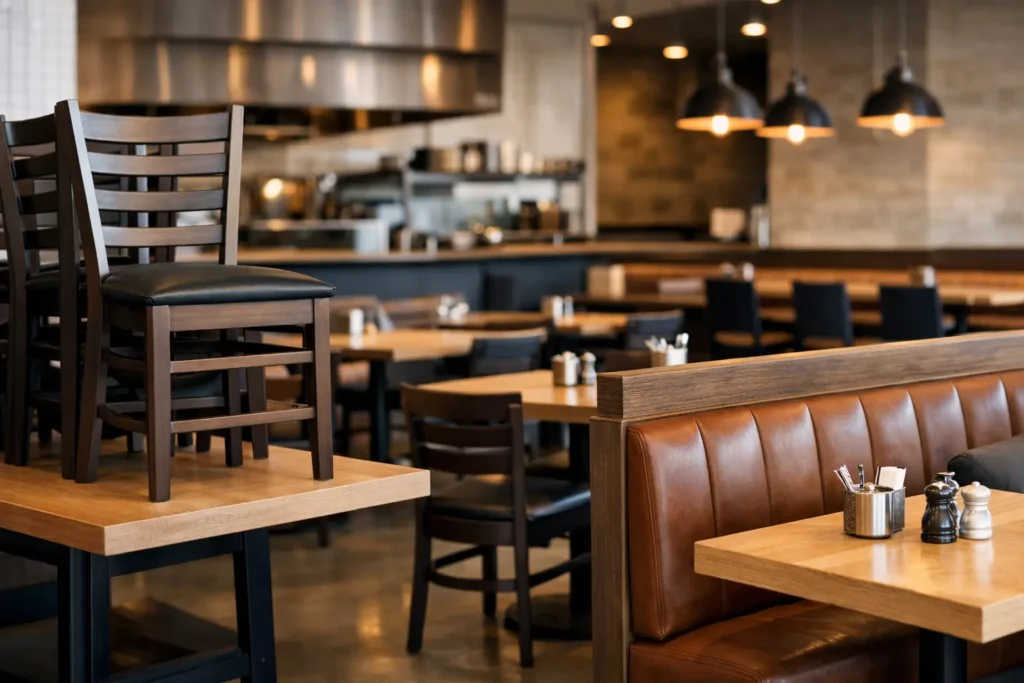
Franchise Restaurant Furniture Packages That Scale
A franchise opening can lose time and budget long before the first customer walks in. When seating, tables, booths, bar furniture, and patio pieces are sourced separately for every location, minor differences quickly become operational problems. Well-planned franchise restaurant furniture packages give operators a repeatable foundation for each opening while preserving the flexibility needed for different footprints, markets, and service models.
For franchise groups, furniture is not simply a finishing layer. It affects guest flow, cleaning routines, seat count, staff movement, durability, brand perception, and the pace of construction. A package approach turns those connected decisions into a coordinated procurement plan rather than a collection of disconnected product orders.
What a Franchise Furniture Package Should Solve
The right package starts with the operating model, not a catalog. A quick-service concept with high guest turnover needs different seating, clearances, and material priorities than a full-service restaurant built around longer stays and table service. Both may use a standard design language, but their furnishing specifications should respond to how guests and employees actually use the space.
A complete restaurant furniture package commonly includes dining chairs, bar stools, tables, booths or banquettes, communal seating, host stands, outdoor furniture, and occasional pieces for waiting or pickup areas. The scope may also include custom millwork-adjacent furniture components when a concept calls for a specific booth profile, tabletop finish, or branded seating detail.
More importantly, the package establishes a controlled set of approved products and finishes. This prevents a new location from substituting a visually similar chair that does not meet the original durability standard or ordering tables with slightly different dimensions that disrupt the planned layout. Consistency matters because guests recognize a franchise through repeated cues, including the comfort and condition of its dining environment.
Standardization Without a One-Size-Fits-All Layout
Franchise systems need consistency, but identical furniture plans are rarely practical. An end-cap location, urban inline store, airport unit, and freestanding restaurant may all follow the same brand standards while having very different square footage, entry conditions, outdoor areas, and code requirements.
A scalable package separates what should remain fixed from what can be adapted. Fixed elements often include approved frame styles, upholstery grades, wood or metal finish options, table bases, and core dimensions. Adaptable elements include the mix of two-top and four-top tables, booth runs, bar seating quantities, accessible seating locations, and patio configurations.
This distinction helps franchisees work within a clear specification framework without forcing an inefficient plan. A smaller dining room may require more wall-mounted tables and fewer freestanding booths. A high-volume suburban location may need durable communal tables and a larger pickup zone. The furniture package should support both conditions while keeping the restaurant immediately recognizable as part of the same system.
Build an Approved Furniture Matrix
An approved furniture matrix is a practical tool for protecting the concept across locations. It identifies the furniture categories, model numbers or custom drawings, finish selections, performance requirements, and permitted alternates. It can also document lead times, maintenance guidance, and replacement ordering procedures.
This matrix is particularly valuable when projects are managed by different franchisees, architects, general contractors, or regional teams. Instead of repeatedly interpreting a brand standard, the project team can work from a defined package and identify exceptions early. That reduces late-stage substitutions, approval delays, and costly field changes.
Specify for Restaurant Use, Not Residential Appearance
Restaurant furniture must perform under conditions that residential furniture is not designed to handle. Chairs are moved repeatedly, table edges receive constant impact, booths are exposed to spills, and outdoor pieces face sun, rain, and temperature swings. A good-looking product that cannot withstand the service environment becomes a replacement expense and a brand issue.
When evaluating franchise restaurant furniture packages, decision-makers should review several performance factors together:
- Frame construction and joinery suitable for frequent movement and high occupancy
- Commercial-grade upholstery, foam, and surface materials matched to cleaning protocols
- Tabletop materials that resist moisture, heat, stains, and edge damage
- Floor-protection details and base designs that support stability on real jobsite conditions
- Outdoor-rated finishes and materials for patio areas, including UV and corrosion resistance
There are trade-offs. Wood seating may add warmth and support a premium brand position, but it can show wear differently than powder-coated metal. Upholstered booths improve comfort and acoustic control, but they require a material specification that fits the restaurant’s cleaning practices. Laminate tabletops can offer predictable durability and cost control, while solid wood may better suit concepts where natural variation is part of the intended design.
The best answer depends on service volume, menu, maintenance capacity, guest dwell time, and the visual standard the franchise is trying to maintain over several years of operation.
Coordinate Furniture With the Floor Plan Early
Furniture planning should happen alongside layout development, not after kitchen equipment, utilities, and finishes have already been finalized. Seat count is only one measure of a successful dining room. The plan also needs practical circulation for guests, servers, bussing, ADA access, cleaning, and delivery activity.
A table that fits on paper may be too close to an aisle once chair pull-back and occupied seating are considered. A booth layout may look efficient until electrical locations, wall protection, or window conditions are reviewed. Bar stool spacing can affect both guest comfort and the ability of staff to move behind the bar.
Early coordination helps teams make decisions with real dimensions in mind. It also allows furniture suppliers to flag concerns related to base placement, booth wall conditions, tabletop overhangs, or the interaction between furniture and flooring transitions. These are small details individually, but they can have a major effect on installation day and long-term usability.
Make Procurement Repeatable Across Locations
The value of a package increases as a franchise network grows. Repeatable specifications create purchasing leverage, but they also create a clearer process for quoting, production, delivery, and installation coordination. Rather than beginning every project with a new sourcing exercise, operators can move from approved plans to a location-specific bill of furniture.
That does not mean every item must be stocked or that every project will have the same lead time. Custom booths, specialty finishes, and large-volume orders may require more production planning. The advantage is visibility. A coordinated furniture partner can identify long-lead items, establish a release schedule, and align deliveries with construction milestones before the project reaches a critical deadline.
For remodels, the package should also address continuity. Franchise operators may need replacement chairs, additional tables, or matching booth sections years after the initial opening. Maintaining documented specifications and finish standards makes these updates more manageable and avoids a patched appearance across the restaurant.
Consider Installation, Storage, and Site Readiness
Furniture procurement does not end when products leave the factory. Restaurants often have narrow receiving windows, limited on-site storage, active construction trades, and opening-date pressure. A delivery that arrives too early can be damaged or create a site coordination problem. A delivery that arrives too late can delay final inspections, training, photography, or opening preparations.
Project planning should define who receives the furniture, where it will be staged, whether assembly is required, and which party is responsible for placement and debris removal. White-glove installation may be the right choice for complex layouts, large booth installations, or projects with strict opening schedules. In other cases, a contractor-managed installation may be more cost-effective if responsibilities are clearly assigned.
FOH Furniture supports this type of coordinated project execution through furniture planning, custom manufacturing, delivery coordination, and professional design support. That integrated approach can reduce the gaps that often occur when furniture design, sourcing, and installation are managed as separate workstreams.
Questions to Ask Before Approving a Package
Before final approval, franchise teams should confirm that the furniture package supports the brand prototype and the realities of local sites. Ask whether the seating mix meets the intended capacity without compromising circulation, whether finishes are available for future replacements, and whether each material fits the operation’s cleaning and maintenance routine.
It is also useful to ask how the package handles exceptions. A franchise system needs a process for reviewing a landlord condition, a local code requirement, an atypical patio, or a smaller-than-standard dining room. Controlled flexibility is not a weakness in the program. It is what allows the brand to adapt without losing consistency.
The strongest package gives every new location a familiar starting point while leaving room for smart, site-specific decisions. When furniture is planned as part of the operating environment, each opening is easier to coordinate and better prepared for the daily wear that follows.

Furnishing a Commercial Space?
Let’s bring your vision to life with furniture that is durable, compliant, and built for real-world performance.
Planning a Commercial Furniture Project?
- Expert Project Guidance
- Competitive Pricing
- Quality You Can Trust


