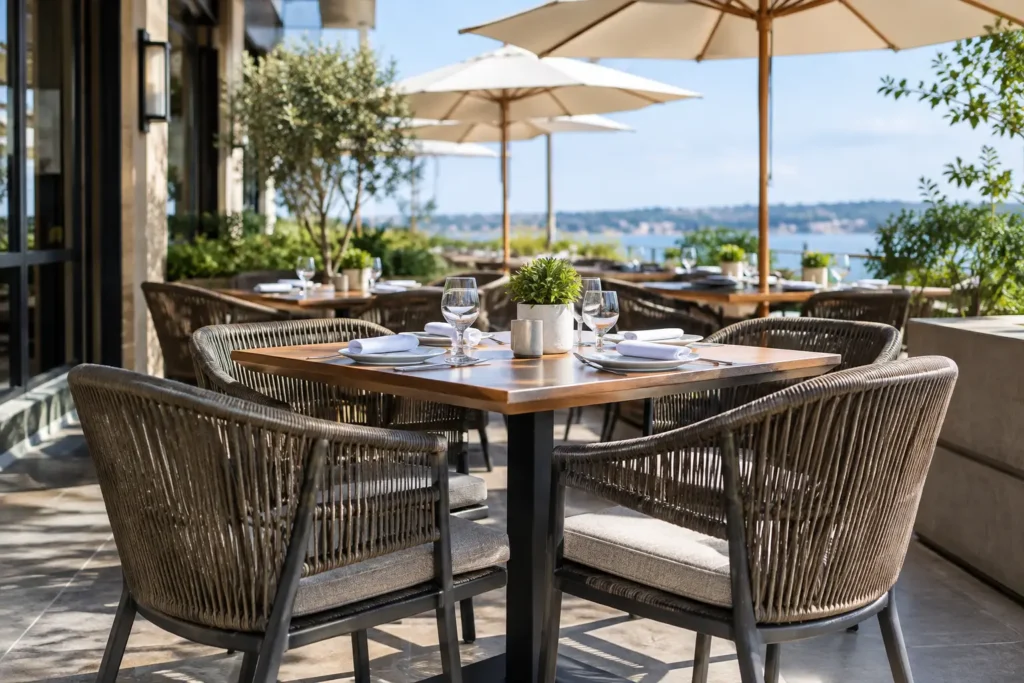
A patio table that looks good on opening day can become an operating problem by the end of its first season. Wobble, corrosion, difficult cleaning, poor umbrella placement, and tight server paths all affect guest experience and labor. The best tables for restaurant patios are selected as part of a complete outdoor service plan, not as isolated furniture purchases.
For restaurant owners, designers, and project managers, the right specification balances visual character with exposure, turnover requirements, seating capacity, and maintenance resources. A compact neighborhood patio, a resort pool deck, and a high-volume sidewalk dining area may all use outdoor tables, but they should not necessarily use the same materials, bases, or layouts.
How to Choose the Best Tables for Restaurant Patios
Start with the conditions the furniture will face every day. Is the patio covered, partially protected, or fully exposed to sun, rain, wind, and seasonal temperature changes? Will tables be moved at closing, stacked for events, or remain in place year-round? These answers should guide the specification before a finish or tabletop shape is selected.
Traffic level matters just as much as weather. A table at a quick-service restaurant may be wiped down dozens of times a day and repositioned frequently. A fine-dining terrace may place more value on a substantial look, larger tops, and a base that supports glassware and full place settings without movement. Commercial patio furniture must suit the actual service model, not simply the intended atmosphere.
Evaluate exposure and local conditions
Salt air, pool chemicals, intense UV exposure, wind, and freeze-thaw cycles each create different risks. Coastal projects often need materials and finishes selected specifically for corrosion resistance. Rooftop patios may require heavier bases or secure placement strategies because lightweight tables can become a safety concern in high winds. In colder markets, a storage and winterization plan may influence whether folding, nesting, or easily movable tables make sense.
It also helps to establish responsibility for daily care. Even a durable commercial table will age prematurely if standing water is allowed to remain on surfaces, abrasives are used during cleaning, or damaged glides are ignored. Material selection and maintenance procedures should work together.
Select Materials for Commercial Outdoor Use
There is no single best patio table material. The right choice depends on climate, design direction, budget, and how much ongoing care the operator can support.
Powder-coated aluminum
Aluminum is a practical choice for many restaurant patios because it is relatively lightweight, corrosion resistant, and available in a wide range of colors and profiles. It works well when staff need to reconfigure tables regularly or when an operator wants a coordinated collection of dining tables, bar-height tables, and lounge pieces.
The trade-off is stability. Lightweight aluminum tables need properly engineered bases and adjustable glides, particularly on pavers, decking, or other uneven surfaces. Finish quality also matters. A commercial-grade powder coat will generally hold up better than a basic painted finish, but it still needs appropriate cleaning and touch-up procedures.
Stainless steel and coated steel
Steel can provide a more substantial, architectural appearance and can be an effective option for fixed layouts or higher-end dining environments. Stainless steel is often considered for demanding outdoor locations, though the grade and finish should be reviewed for the specific environment. Not all stainless performs the same way near saltwater or pools.
Powder-coated steel can offer excellent value and visual flexibility, but exposed chips or scratches should be addressed promptly to limit corrosion. For either option, specify bases with quality leveling glides and enough weight to support the table top and intended service use.
Compact laminate and other performance table tops
Compact laminate tops are frequently specified for restaurant patios because they offer a clean, contemporary look and are generally easy to wipe down. They can be produced in wood-look, stone-look, solid-color, and graphic finishes, making them useful when the outdoor area must align with an interior brand palette.
Edges, core construction, mounting methods, and expansion allowances deserve close review. Outdoor table tops move with changes in temperature and moisture, and an improperly assembled table may show warping, cracking, or fastener issues over time. A performance surface is only as dependable as the complete table construction beneath it.
Wood and wood-look options
Teak and other outdoor-rated wood species bring warmth to hospitality settings, especially for boutique hotels, resort dining, and patios that need a more residential visual language. They require an informed maintenance decision. Some operators prefer wood to weather naturally; others want to retain a more uniform color through regular care.
Wood-look materials can reduce that maintenance commitment while maintaining a softer appearance than metal. The key is to request samples and assess texture, sheen, heat retention, and cleanability under real restaurant conditions. A surface that photographs well may not be the best choice for a patio serving sauces, cocktails, and hot plates throughout the day.
Match Table Shape to Service and Seating Density
Table size and shape affect both revenue potential and guest comfort. Square and rectangular tables are typically the most efficient for flexible restaurant layouts because they can be pushed together for larger parties. They work well in spaces where reservation patterns change throughout the day.
Round tables can create a more relaxed, social setting and may improve circulation around corners or landscape features. They are often a strong fit for smaller groups, although they can consume more usable floor area when several are arranged closely together. Bar-height tables may add capacity along railings, window lines, or waiting areas, but they should not replace accessible standard-height seating.
Allow sufficient space for chairs to move, guests to pass, and servers to carry trays without interruption. Layout drawings should account for occupied chairs, not just the footprint of the table tops. On a busy patio, a few extra inches of clearance can prevent daily congestion and reduce accidental contact with guests.
Size tables for the menu, not only the chair count
A two-top that technically seats two may still be too small for shared appetizers, beverages, condiments, and full entrées. Similarly, a four-top should give guests enough usable surface area without forcing staff to over-clear the table between courses. Consider the typical check, tableware, beverage program, and service style before finalizing top dimensions.
This is especially relevant for patios where guests tend to linger. Larger tops may reduce the total table count, but they can support a more comfortable experience and fewer service interruptions. The better decision depends on the restaurant’s operating model and expected turn times.
Specify Bases That Stay Stable in Real Conditions
The table base is often where patio performance is won or lost. A visually appealing top cannot compensate for a base that rocks on uneven concrete or fails under the weight of a larger surface. Commercial pedestal bases should be sized for the top dimensions they support, with attention to weight distribution and leg clearance.
Four-leg tables can be useful for certain aesthetics and may offer straightforward stacking or movement, but they are more sensitive to uneven flooring. Pedestal tables typically provide better chair access and can be easier to level, provided the base plate has adequate mass. For fixed outdoor installations, bolted or anchored solutions may be appropriate, though they reduce layout flexibility and require coordination with the site conditions.
Umbrella compatibility should be resolved during specification, not after delivery. Confirm the umbrella pole diameter, table cutout requirements, base weight, clearance between tables, and whether umbrellas will be removed during high winds. A patio plan that includes shade without considering these details can create operational and safety issues.
Plan for Cleaning, Storage, and Replacement
The most successful outdoor furniture programs make everyday work easier. Select surfaces that staff can clean with practical, approved products. Avoid deeply textured tops that trap food debris unless the visual value clearly justifies the added labor. Confirm whether chairs and tables can be moved safely by one employee and whether the storage area can accommodate the furniture during storms or off-season periods.
It is also wise to think beyond the initial opening order. Restaurant patios are subject to accidental damage, theft, and gradual finish wear. A coordinated commercial furniture package makes it easier to plan for matching replacement pieces, additional seating, and future layout changes. For multi-area projects, FOH Furniture can support coordinated planning, custom specifications, and sourcing across the patio, dining room, bar, and related hospitality spaces.
Before releasing a purchase order, review physical samples, finishes, base configurations, lead times, freight access, assembly requirements, and the final furniture layout. This level of coordination is particularly valuable when a project includes custom table tops, branded colors, or a mix of dining, bar, and lounge seating.
A restaurant patio should feel intentional to guests and manageable to the team that operates it. Specify tables that support the menu, climate, floor plan, and maintenance reality, and the outdoor area can remain an asset long after the first busy season.