
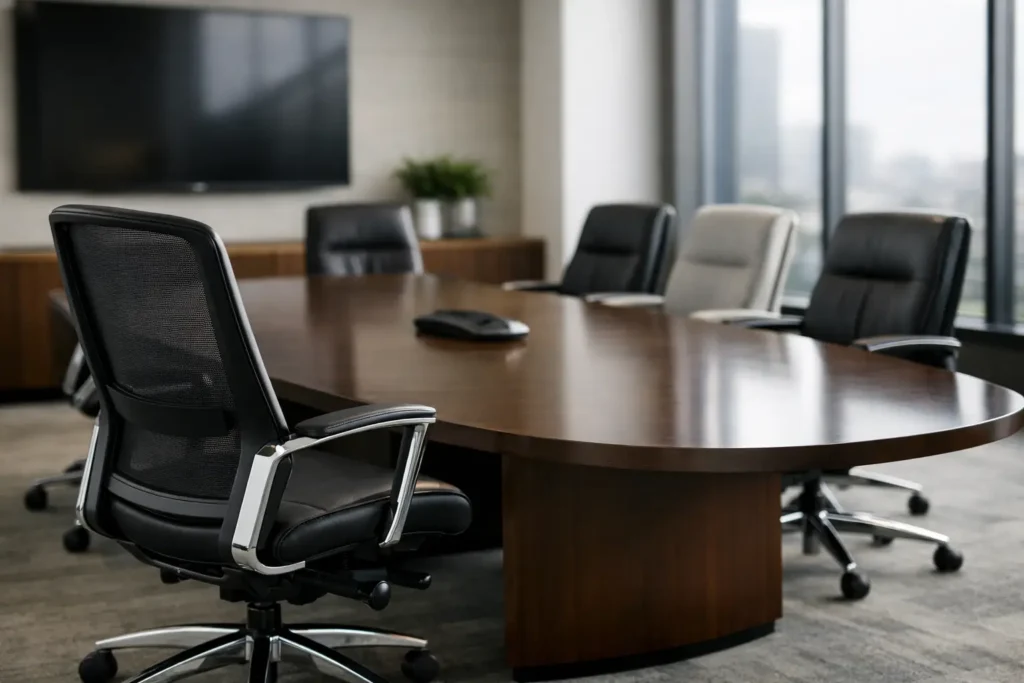
Best Office Chairs for Conference Rooms
A conference room chair gets judged fast. If it squeaks, stains easily, feels cramped after 20 minutes, or clashes with the table scale, everyone notices. That is why choosing the best office chairs for conference rooms is less about chasing a trend and more about matching seating to how the room actually performs.
For commercial buyers, this decision affects more than appearance. Conference chairs influence meeting duration, client impressions, cleaning routines, ADA planning, and how well a room supports everything from executive presentations to daily team huddles. In most projects, the right answer is not simply the most expensive chair or the most padded one. It is the chair that fits the use case, the room dimensions, and the broader furniture package.
What makes the best office chairs for conference rooms
The best conference room seating balances five factors: comfort, footprint, durability, mobility, and visual consistency. If one of those is off, the room usually feels off too.
Comfort matters, but conference room comfort is different from task-chair comfort. Most meeting chairs are used for shorter sitting periods than workstation seating, so they do not need every ergonomic adjustment found in executive desk chairs. At the same time, they cannot be so minimal that guests start shifting in their seats halfway through a presentation. A supportive back, a properly proportioned seat, and enough flex or cushion to handle a one-hour meeting are usually the baseline.
Footprint is often underestimated. A chair may look appropriately scaled online, then overcrowd the table once installed. Arm width, base diameter, and the amount of pull-back clearance behind each chair all affect circulation. In compact conference rooms, a sleeker profile can improve function more than a heavily upholstered design.
Durability is non-negotiable in commercial settings. High-use conference rooms need materials and construction that can handle constant movement, regular cleaning, and varied users. Upholstery selection, frame finish, caster quality, and weight capacity all deserve attention during specification.
Mobility should reflect the room type. Some conference rooms benefit from swivel chairs on casters because users need to pivot between screens, speakers, and side discussions. Others perform better with stationary sled-base or four-leg chairs that keep the room looking orderly and reduce movement noise.
Visual consistency ties the room to the rest of the project. Conference spaces often sit adjacent to executive offices, reception areas, or open work zones. The chair should support that design language rather than feeling like an isolated purchase.
Start with the room’s purpose, not the chair style
A boardroom, a training room, and a multipurpose meeting space should not all be furnished the same way. Buyers who begin with aesthetics alone often end up replacing seating earlier than expected.
In executive boardrooms, chairs typically need a stronger visual presence. Higher backs, refined upholstery, and polished finishes can support a more formal environment. That said, oversized executive chairs can quickly dominate the room and limit seating count. For many boardrooms, a mid-back conference chair with premium materials creates a cleaner profile while still presenting well.
In team meeting rooms, flexibility usually matters more than formality. These spaces often host quick check-ins, hybrid meetings, and collaborative sessions. Chairs with casters and swivel bases help users move naturally, but the mechanism should feel controlled rather than loose. Too much recline or excessive bulk can make a room feel less focused.
For training or multi-use conference spaces, stackability or lighter-weight frames may be more practical than traditional conference chairs. If the room is regularly reconfigured, a beautiful chair that is difficult to move becomes an operational issue.
Key chair features to evaluate before you specify
Seat height and table clearance should be verified early. Standard conference tables work with standard-height seating, but arm height can create problems. If chair arms hit the table apron or do not tuck in properly, the room loses usable space and starts to look crowded.
Back height affects both comfort and visual rhythm. Mid-back chairs are usually the safest commercial choice because they support users without blocking sightlines across the table. High-back chairs can work in larger boardrooms, especially where a more executive feel is required, but in smaller rooms they can look heavy.
Arm style changes how people use the chair. Fixed arms provide structure and can improve comfort during longer meetings, yet they also increase width. Armless chairs fit more easily around tight conference tables and can create a cleaner profile, though some users perceive them as less supportive.
Base type should align with floor conditions and meeting style. A five-star caster base supports movement and is familiar in office settings. A four-leg or sled base creates a more anchored look and may perform better on hard surfaces where uncontrolled rolling is a concern.
Material selection should reflect maintenance expectations. Upholstered seats can improve comfort and perceived quality, but some fabrics show wear faster in high-turnover environments. Faux leather and performance textiles are often practical choices for easy cleaning, while mesh can work well in more contemporary settings if the conference room design supports it.
Matching conference chairs to commercial interiors
The best office chairs for conference rooms do not operate as standalone pieces. They need to fit the table style, floor finish, lighting, and overall brand presentation of the space.
A heavy wood veneer conference table often pairs best with chairs that have enough material presence to hold their own visually. Thin plastic shells may look under-scaled in that setting. On the other hand, a modern conference room with glass, laminate, or minimalist architectural lines usually benefits from cleaner chair silhouettes.
Color should be handled strategically. Neutral seating remains the most versatile option for commercial projects because it coordinates across phases and reduces the risk of quick visual fatigue. Accent colors can work, especially in branded meeting spaces, but they should be chosen with long-term finish continuity in mind. Reordering a common charcoal or tan is usually easier than matching a niche custom tone later.
This is also where custom capability becomes valuable. In larger office projects, conference room chairs often need to align with adjacent guest seating, executive office furniture, or shared finishes used across multiple spaces. A coordinated approach produces a stronger result than sourcing each room separately.
Common mistakes buyers make
One common mistake is over-specifying ergonomic features. A conference chair is not a task chair. Adjustable arms, headrests, seat sliders, and highly technical mechanisms may add cost without improving the actual meeting experience.
Another is under-specifying durability. Conference rooms can appear low-use on paper, yet many serve as daily touchdown spaces, interview rooms, and overflow work areas. Chairs in those rooms experience more wear than buyers initially expect.
Scale errors are also frequent. A chair may meet every quality standard and still be the wrong choice if it reduces legroom, interrupts circulation, or makes the room feel cramped. This is where furniture planning support matters. A good specification process looks at the room in plan, not just in product photos.
The last major issue is buying chairs in isolation from the broader project. When conference room seating is selected as a one-off purchase, finish mismatches, delivery inconsistencies, and layout problems become more likely. Commercial furniture performs better when it is planned as part of an integrated package.
How to choose the best office chairs for conference rooms by use case
If the room hosts formal client meetings or executive presentations, prioritize refined upholstery, supportive mid- or high-back profiles, and a controlled swivel or stationary base. If the room is used for internal collaboration, a lighter conference chair with mobility and a smaller footprint often makes more sense.
If space is tight, focus on narrow widths, clean arm designs, and chairs that tuck efficiently under the table. If the room needs to flex for multiple purposes, look closely at weight, stackability, and ease of reconfiguration.
For design firms, architects, and project managers, the right choice usually comes down to specification clarity. Confirm dimensions, finish options, lead times, and durability details before approval. For business owners and operators, the better question is often simpler: will this chair still work for daily use, cleaning, and brand presentation a year from now?
That is where a project-oriented sourcing partner adds value. FOH Furniture supports conference room seating as part of a larger commercial furnishing strategy, helping buyers align chair selection with layout planning, finish coordination, custom requirements, and overall project execution.
A conference room chair does not need to do everything. It needs to do the right things well for the people using the room, the image the business wants to present, and the operational demands behind the scenes. When those pieces line up, the room feels more polished, works more efficiently, and holds up better over time.

Furnishing a Commercial Space?
Let’s bring your vision to life with furniture that is durable, compliant, and built for real-world performance.
Planning a Commercial Furniture Project?
- Expert Project Guidance
- Competitive Pricing
- Quality You Can Trust


